Case Study
Adorn Croft
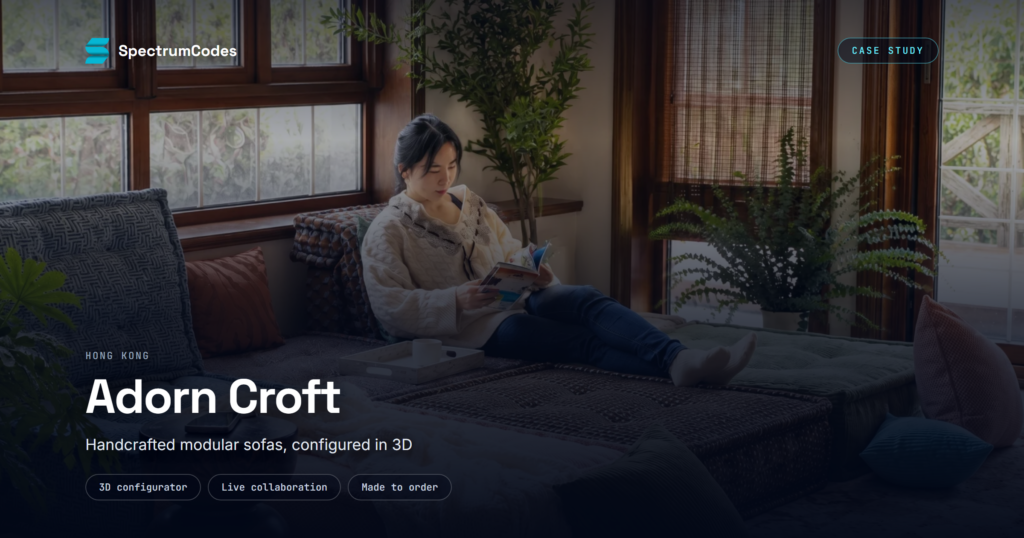
Adorn Croft promises clients they will see their sofa before they pay for it. Producing those visuals by hand was the bottleneck. Now clients build the sofa themselves, in the browser.
The company
Adorn Croft is a Hong Kong-based handcrafted luxury furniture brand founded by Molin Sloane, specialising in customisable modular sofas, hand-tufted rugs and accent pieces. It serves homeowners and interior designers worldwide through a trade program offering custom builds with no minimum order quantity and a four-week turnaround.
The brand is built on radical transparency: free fabric swatches, 3D renderings, and photo approval of the finished piece before final payment. Everything is made to order in OEKO-TEX certified materials and built to last eight years or more — work that has drawn recognition from publications including GQ China.
The challenge
- The visuals were the bottleneck. Producing 3D representations of each fabric and style was slow to create and slow to render — and the brand promise depends on the client seeing the piece first.
- Iterations lived in chat. Design changes and client feedback moved through scattered emails and WhatsApp messages, which meant miscommunication and delay on exactly the step that was supposed to build confidence.
The constraint sat directly on the thing the brand sells. Every extra render cycle was time added to a four-week promise, spent on reassurance rather than on furniture.
What we built
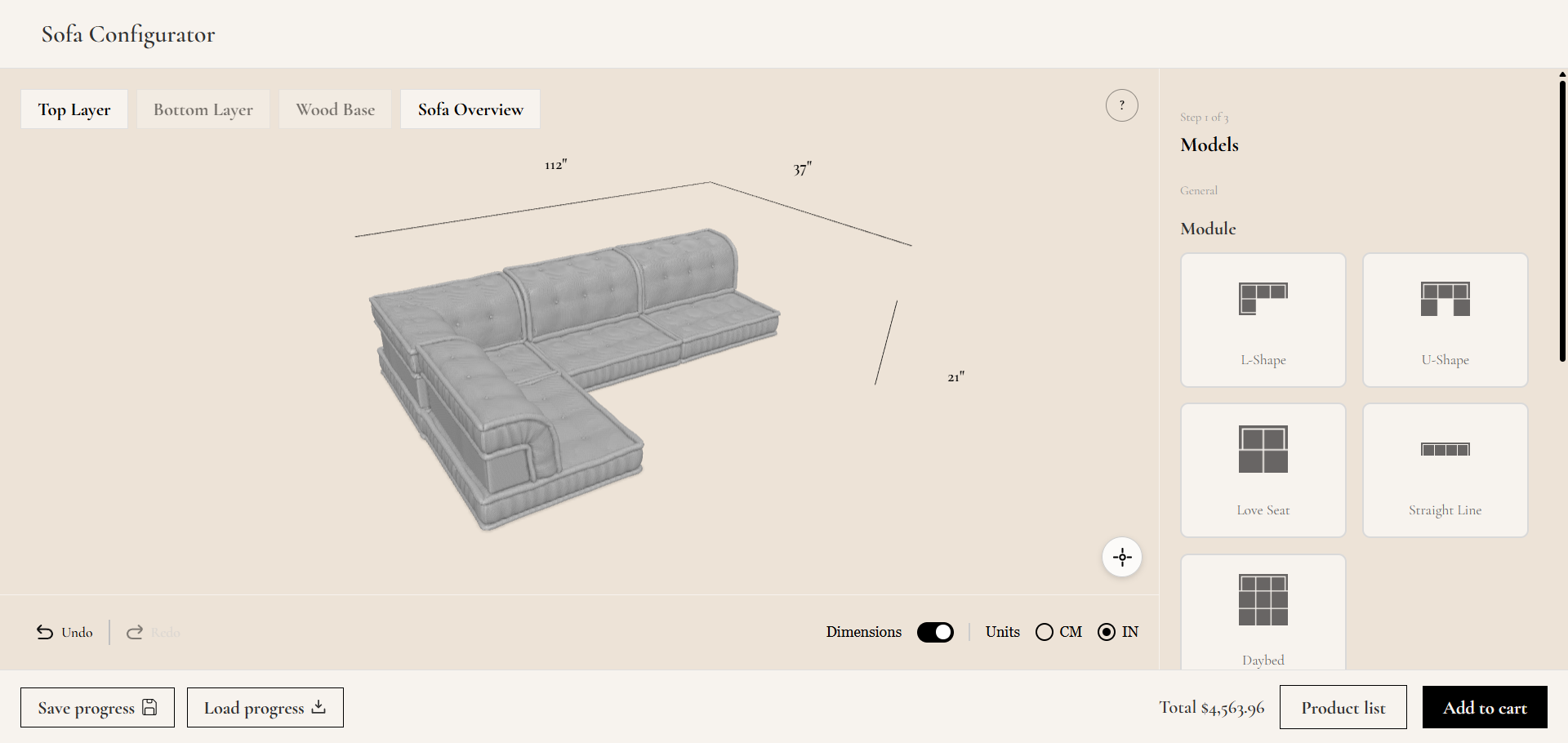
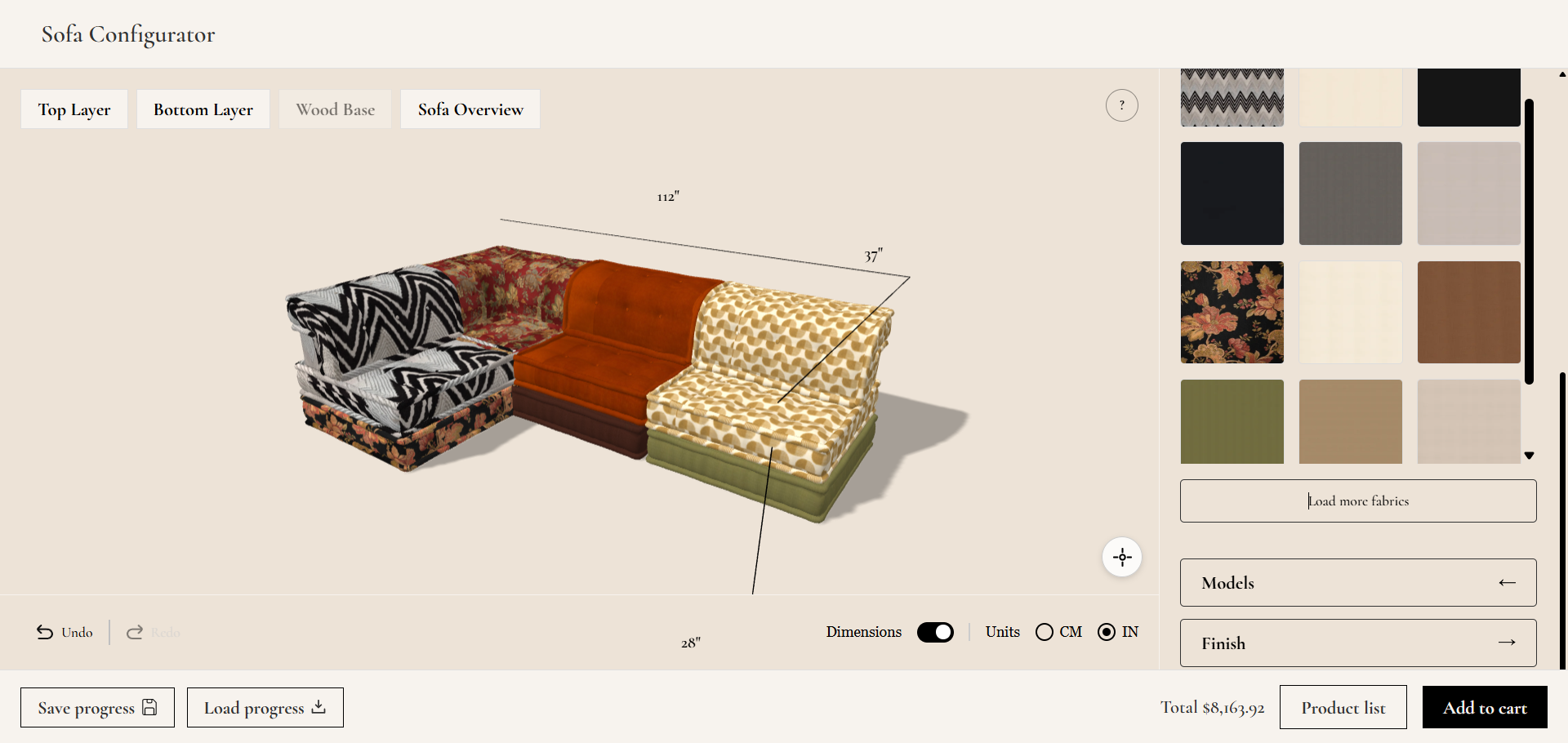
- A real-time 3D configurator. Clients design their own sofa in the browser, selecting styles and seeing fabrics applied instantly instead of waiting on a render.
- Fabric visualisation on the spot. Adding a fabric shows the finished presentation immediately, removing the back-and-forth entirely.
- Saved progress and live collaboration. The Adorn Croft team and the client can work on the same model at the same time, and pick it up again later.
The result
The render queue is gone from the middle of the sales conversation. What used to be a request, a wait and a reply is now something the client does themselves while they are still interested.
Feedback happens on the model rather than in a message thread, so there is no gap between what the client asked for and what the team understood — which is what the four-week turnaround and the no-minimum trade program depend on.
Got a process that looks like this?
Tell us where it hurts. We’ll tell you honestly whether it’s worth building.
Book a Free Call